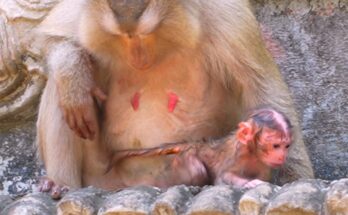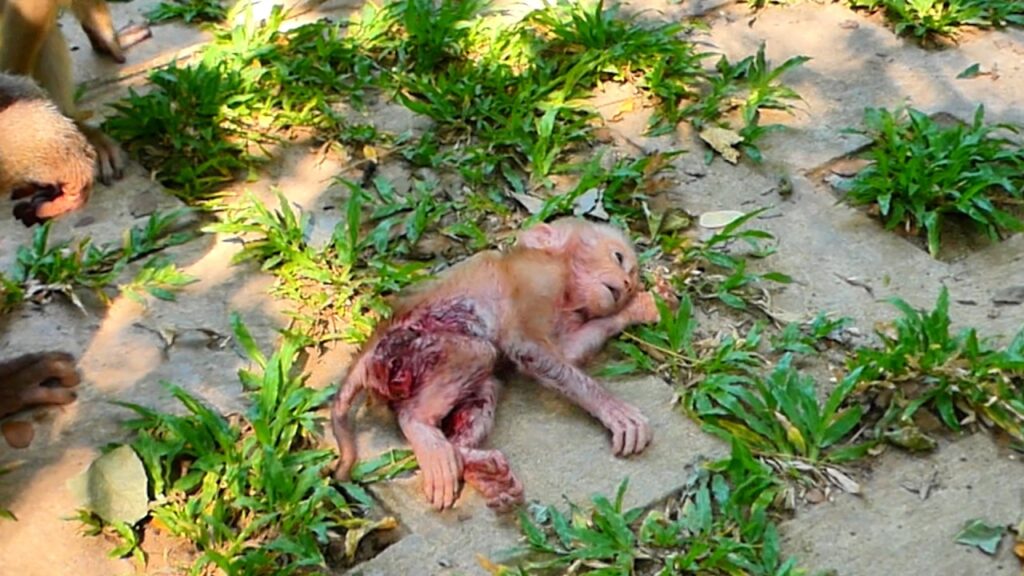
Breaking News! Primate Politics: Why Newborns Like Baby Levy Are at Risk in the Wild
In the dense canopies and sprawling forests where primates live, survival is never guaranteed—especially for the youngest members of the troop. Newborns like Baby Levy enter a world shaped not just by predators and environmental challenges, but by complex social dynamics often described as “primate politics.” These social structures, while fascinating, can pose serious risks to vulnerable infants.
Primates, including monkeys and apes, live in highly organized groups governed by dominance hierarchies. These hierarchies determine access to food, mating opportunities, and protection. However, they also create tension, competition, and sometimes violence. For newborns, this environment can be particularly dangerous. Infants are often caught in the crossfire of power struggles, especially when new males attempt to take control of a group.
One of the most alarming threats is infanticide. In several primate species, incoming dominant males may kill infants that are not their own. This behavior, while brutal, is driven by evolutionary instincts: by eliminating offspring sired by previous males, the new leader can bring females back into reproductive readiness more quickly. For babies like Levy, this means their survival may depend heavily on the strength and status of their mother within the group.
Mothers play a critical role in protecting their young, but their success varies. High-ranking females often receive support from allies and face fewer threats, while lower-ranking mothers may struggle to defend their infants. Social bonds, therefore, are not just about companionship—they can mean the difference between life and death.
Environmental pressures add another layer of risk. Habitat loss, food scarcity, and human encroachment can intensify competition within groups, making social tensions even more volatile. In such conditions, weaker individuals—especially newborns—are the most at risk.
Despite these challenges, primates are also capable of remarkable cooperation and care. Some groups exhibit alloparenting, where individuals other than the mother help care for infants, increasing their chances of survival. These moments of compassion highlight the complexity of primate societies.
Ultimately, the story of Baby Levy reflects a broader truth: in the wild, survival is shaped as much by social strategy as by physical strength.