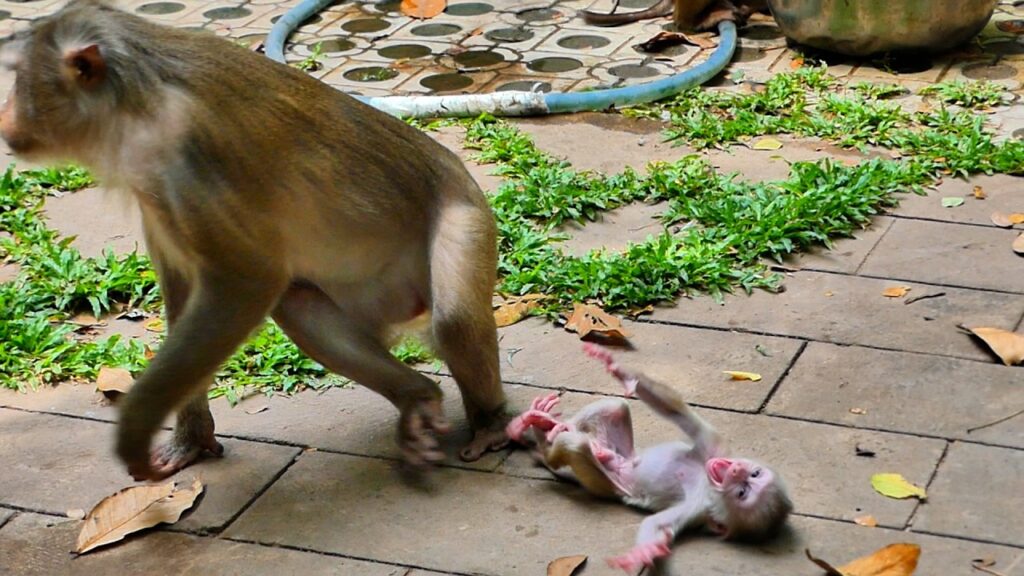
In the natural world, macaque monkeys communicate through a wide range of vocal sounds, each carrying important meaning. These vocalizations help them express needs, maintain social bonds, and respond to changes in their environment. One of the most noticeable sounds occurs during moments of separation, especially between mothers and their young.
When a young macaque becomes separated, it may produce soft calls or higher-pitched sounds to signal discomfort and seek reassurance. These vocal expressions are not only a way to communicate distress but also a method to help the mother locate her baby quickly. In response, the mother may answer with calm, guiding calls, helping to reunite and restore a sense of safety.
This interaction highlights the strong connection within macaque families. Vocal communication plays a key role in maintaining that bond, especially during uncertain moments. Observing these behaviors allows us to better understand how animals adapt and care for one another in the wild.
Such moments remind us that communication is essential for survival and emotional balance. Through sound and response, macaques show awareness, connection, and care, offering a deeper insight into the complexity and sensitivity of life in nature.